

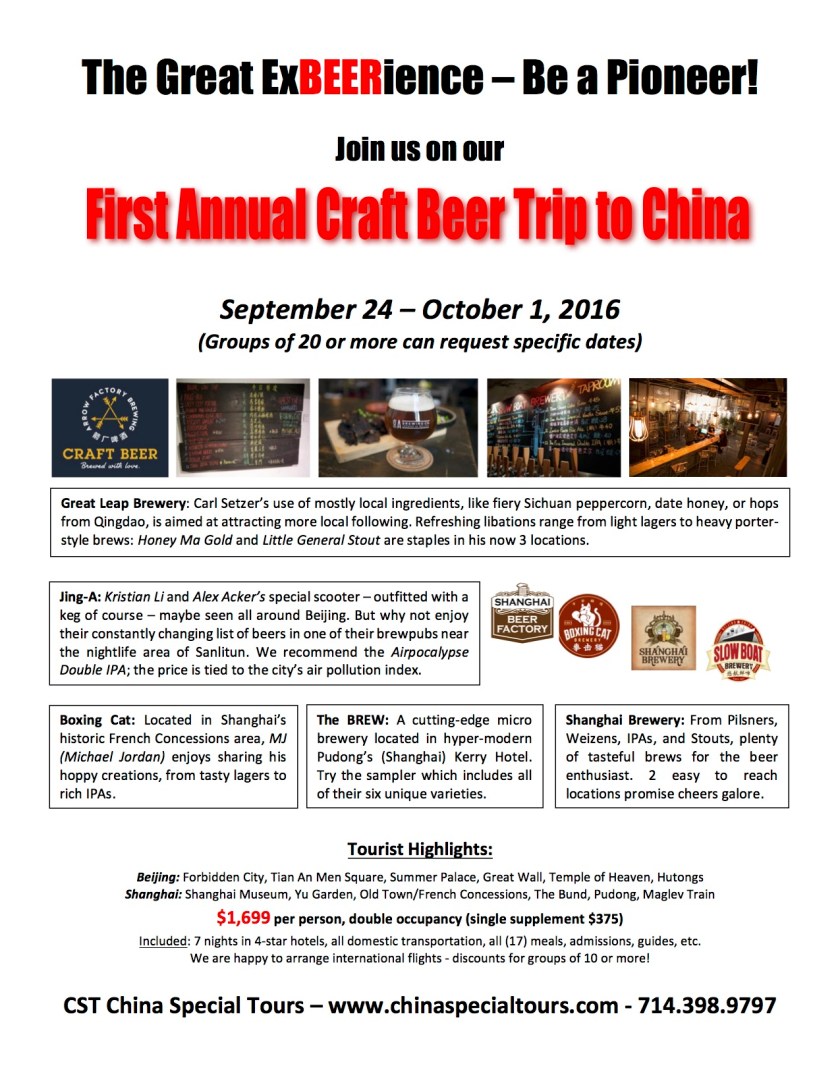
Be a Pioneer – Join the First Annual Craft Beer Trip to China
Excellent article about China’s craft beer scene, posted in Beijing City Weekend. You can visit all of the breweries mentioned in this article.
How: Join the FIRST ANNUAL CRAFT BEER TRIP TO CHINA!
When: September 24 – October 1, 2016.
How much: $1,699 only!
More info: http://www.chinaspecialtours.com
Exploring China’s Craft Beer Culture
by missmayura – Thu, May 19, 2016
History loves to repeat itself. Back in the 1900s, homesick Russian and German expats began to churn out beer in the northern cities of Harbin and Qingdao to recreate a taste of their countries of origin. Now, over a century later, a new craft movement is brewing across China—and the world is taking notice.
The Birth of the Microbrewery
A handful of homebrewers recall familiar tastes with local ingredients
Brewing beer is far from a foreign concept in China, and it’s one that certainly outdates the expats. China’s brewing history dates all the way back to 7000 BC, though beer was eventually supplanted by liquors like baijiu as the ceremonial beverage of choice. The remarkable thing about the budding craft culture—started by a handful of brewers that were dissatisfied with the watered-down lagers available on tap and decided to brew their own—is how quickly China’s movement has grown. “If I remember correctly, Shanghai’s first microbrewery opened its doors in 2008,” says Di Di, a Shanghai-based beer aficionado better known as “TheBrewGirl” for her pop-up craft beer bars and selling homebrew from the back of her car. Less than a decade later, China has grown from a craft beer desert to several big players dominating the market, with plenty of room for growth. “I see it as the same pattern in the U.S. from the 1980s,” says Di Di. “I’m looking forward to the day that every neighborhood here has its own brewery.”
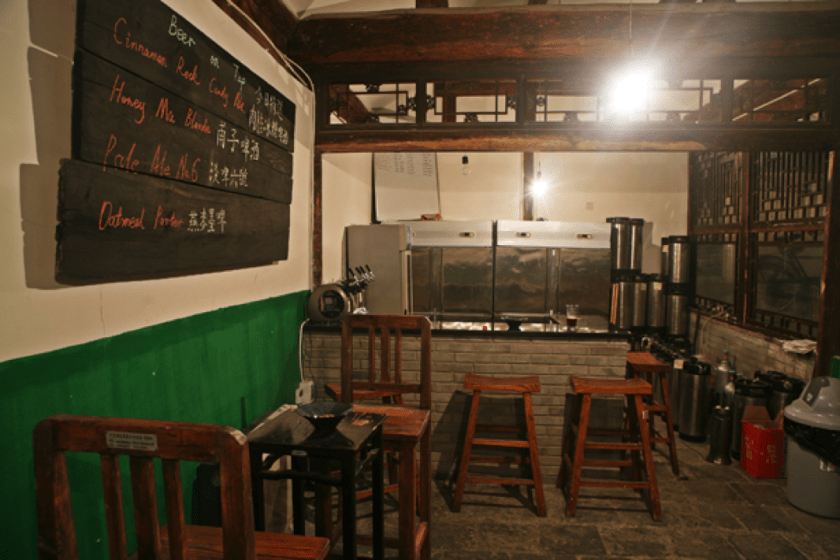
Great Leap, circa 2010
Many credit Great Leap Brewing, a Beijing-based microbrewery co-founded in 2010 by Carl Setzer and his wife Liu Fang, for effectively kicking off the craft beer phenomenon in China’s northern capital. Like many in his line of work, Setzer took up brewing as a hobby outside of backbreaking corporate hours. “After working 17-hour days in IT security consulting, I started to brew beer in my spare time,” he recalls. Demand proved high and Great Leap grew from a one-room hutong courtyard operation into three branches, with widespread production, an annual beer festival, and plenty of media attention to their name. Taking advantage of China’s wealth of local ingredients, Setzer, who is originally from Ohio, chose to localize his beers by adding Sichuan peppercorns, flowers, and oolong tea to appeal to China’s increasingly diverse range of palates.
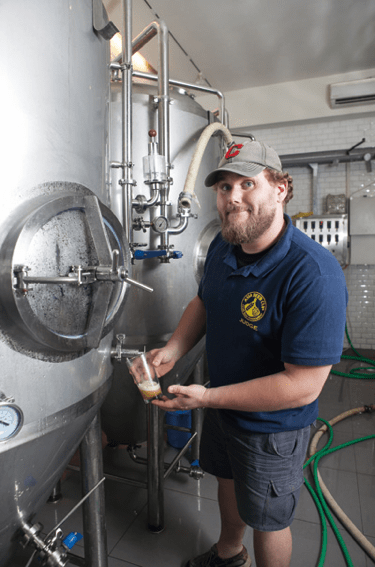
Unlike Shanghai, which generally started from a much more entrepreneurial bent, many Beijing brewers like Setzer got their start in homebrewing—and when brewers come together, they tend to build small communities in the process. (That’s not to say Shanghai doesn’t have its fair share of homebrewers; Di Di is currently brewing a gose [a German sour beer] to enter a Shanghai Homebrewers Association contest in late May.) The two co-founders of Jing-A Brewing Co., Alex Acker and Kristian Li, got their start brewing beer for friends during Chinese New Year back in 2012. That led to pop-up events, guest brewings, and finally in 2014, a flagship location, the Jing-A Taproom, which supplies a growing audience with consistent local beer that doesn’t skimp on flavor or inventiveness.
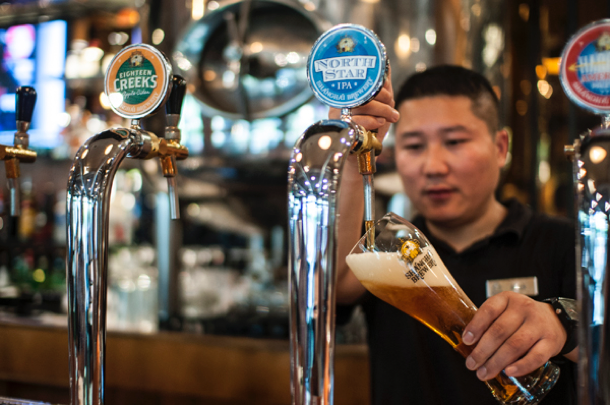
The interest in locally-made beer reflects a cultural shift across China, from business owners to homebrewers right down to the local consumer. It dovetails with China’s burgeoning economy; as citizens, especially China’s younger generation, increasingly have the means to travel and study abroad, their tastes change in the process. “Buying beer is not always about buying the cheapest possible product anymore,” says Kelley Lee, an American-born Chinese entrepreneur who co-founded Shanghai’s Boxing Cat Brewery and Liquid Laundry after failing to find a solid craft beer in Shanghai. Those days are long gone, as evidenced by to the snowballing popularity of China’s craft beer movement. “The more people learn about beer, the more interested they are in trying new kinds of beers, tasting the subtle, or sometimes not-so-subtle differences in flavor profile, aroma and bitterness.”
Chinese beers take center stage
Local breweries are spearheading a craft beer renaissance—and racking up accolades in the process
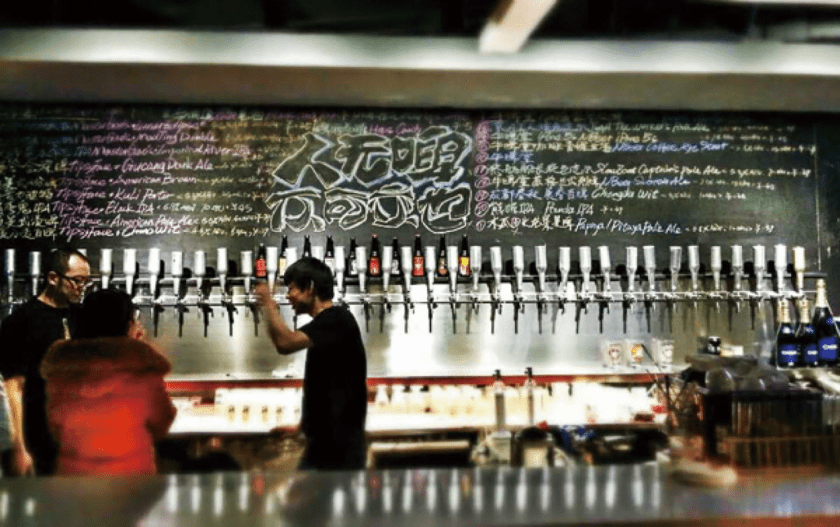
Chinese craft beer is a point of pride for Shanghai’s Daga Brewpub, where dozens of taps pour craft beers from Nanjing, Chengdu, Wuhan, Shanghai, and more. At their Fuxing Lu location, we settled down with a few brews from Beijing’s NBeer—started by Xiao Biar and Yin Hai, veterans of China’s craft scene—that hinted at the promise of future craft offerings.
“We’re very open to new beers,” says manager Nicky Zhang, but sales determine whether a beer will stay for good. Zhang sees many beers come and go at the brewpub, and in that sees a mix of Chinese brewers both trying to replicate trends and to forge their own. “Chinese craft beer is still very new,” says Zhang. “Most start by trying to brew what they like to drink, so they try to learn from the U.S., German and Belgian beer[s].” He mentions that others do experiment with local flavors, or like Nanjing beer guru Master Gao, emulate deep-rooted Chinese imagery in their branding.
The domestic takeover of Daga’s taps is proof that local breweries in China’s cities, both foreign and Chinese-owned, are shaping China’s beer culture at lightning speed. At the newly opened Hop Project on Yongkang Lu—Shanghai’s first bar to regularly vend Jing-A beers—Jing-A’s Richard Ammerman poured us several of their popular flavors. “Flying Fist [IPA] is one of our best-selling beers,” he says, handing us fistfuls of the foamy ale. “It’s usually ordered by hop-lovers and those with more exposure to craft beer, whether they’re foreign or Chinese.” The beer was crisp, hop-forward and, as of that weekend, award-winning at a number of beer competitions.
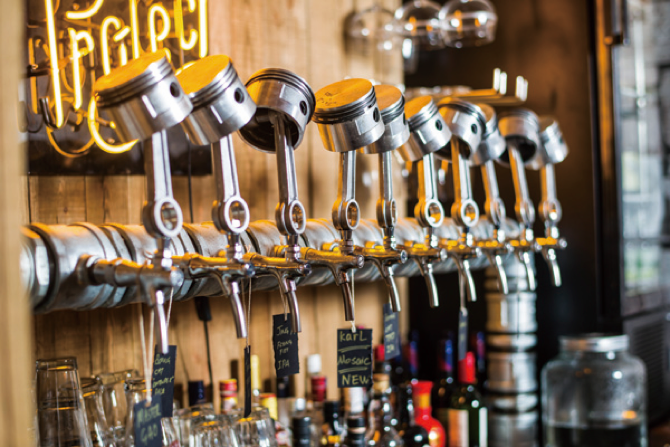
Michael Jordan, brewmaster at Boxing Cat, is also no stranger to beer competitions. After taking up the helm of then-brewmaster Gary Heynes, who passed away in 2010, Jordan guided the brewery to a silver medal at this year’s World Beer Cup, the first for a Chinese craft brewery. “When global beer competitions start to recognize an individual beer style as a ‘Chinese X, Y, or Z,’” says Jordan, “that will be super fun!”
For some brewers, it’s the makeup of China’s craft-consuming crowd that’s changed the most in recent years. “Step into any of Beijing’s big brewpubs or taprooms and you’re likely to see that local Chinese customers outnumber the expats,” Ammerman says. “At least from what we can tell, the Chinese market’s appetite for craft beer is only accelerating.”
Setzer couldn’t agree more, “We’ve gone from 100-percent expatriates when we started to a healthy 65-35 local-expat ratio.”
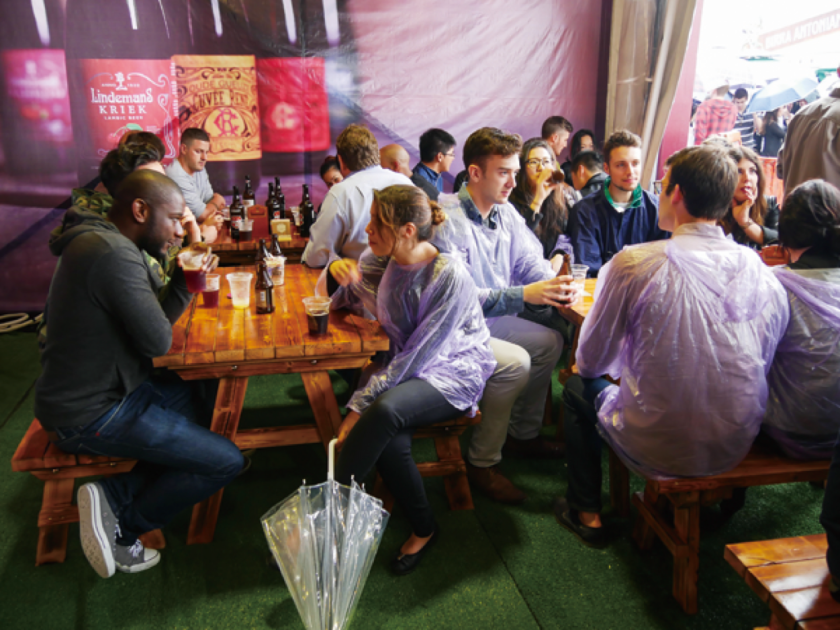
Of course, every burgeoning industry has its pitfalls—including people trying to profit from a still-lucrative niche in the F&B scene. “I do see some warning signs that some business people are jumping into craft beer for the wrong reasons,” says Jordan. “Many people have yet to be exposed to craft beer, good beer, whatever you want to call it. It can be overwhelming as a customer to stand at a bar with close to 40 taps, so it’s important to make sure they have a positive experience.”
There’s also “suitcase beers,” as Setzer calls them—bottles brought illegally into the country as a way to bypass Chinese customs. “Many of these beers are well beyond their expiration date and contain off-flavors that are not so easily ascertained by unseasoned beer drinkers.”

The regular offerings at Jing A
Regardless, international beer festivals, which continue to persevere despite soggy seasonal weather, help whet the appetite for craft beer among China’s expats and locals. At this year’s Shanghai International Beer Festival—marred for some by hours-long lines and over capacity—Chinese craft breweries were beginning to get the respect they deserved, even from their elders. We saw a representative from one old-school German brewery cross the aisle to sample an IPA at the Jing-A booth. “I love your beer!” gushed a volunteer as the man tried a sip.
“Yours is not so bad,” he replied with a smile. “No, but really. This stuff is really good.”
The future of Chinese craft beer
New brews, business and the search for a “Chinese beer”
Goose Island has made it clear that they have big plans for China. Kicking off its “Migration Week” with back-to-back weekends of parties, tastings and brewery tours, the Chicago craft beer stalwart also lined up a collaborative brew with Arrow Factory, a Beijing-based brewery. This is the latest (and probably biggest) in a list of foreign names both big and small collaborating with China-based microbrewers; past examples include Great Leap’s work with Pipeworks Brewery in Chicago, Boxing Cat’s hoppy amber beer with The Celt Experience of Wales and Jing-A’s Hutong Clan CDA made with Oregon’s Boneyard Brewery. There’s even been collaborations between “rival” breweries across China on a number of occasions. The brewers attest that collaborations are a huge part of the fun, allowing them to trade brewing ideas, experiment with ingredients, and get their name out to an entirely new market.
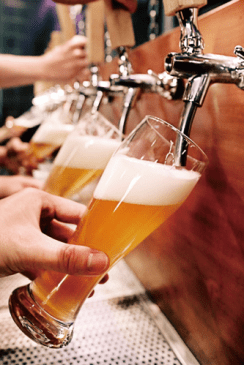
China’s connection to brewing scenes in other cities means that craft beers here are increasingly on par with brewing trends abroad. Liquid Laundry has a nitrogen tap for its rotating selection of nitrogen beers, including the Laundry Latte. (Nitro-brewed drinks are named for special taps that infuse the liquid with nitrogen gas, which beer buffs claim infuses the brew with a smooth, creamy mouthfeel and subtle variations in taste.) While some stick to on-trend methods, other breweries experiment with unexpected tastes. Jing-A’s sour beers offer an odd but likeable flavor, much like a grown-up version of a tart candy. “These have sold surprisingly well,” says Ammerman, adding that Chinese customers are surprisingly open to this unusual brew concept. “We sent out a post to our WeChat followers explaining a bit of the history and science behind sour beers, as well as what flavors to expect. We even gave our dry-hopped sour ale a completely Chinese name, Suan Ge Pi (酸个啤) to make it very clear.”
So what lies on the horizon for China-brewed beer? That depends on who you ask. Foreigners involved in China’s microbrew scene see themselves as cultivators of the craft beer culture. “I take this responsibility very seriously,” says Jordan. “I want to do my part to make sure Chinese craft beer has a bright future.”
Meanwhile, Chinese brewers, like Di Di, who now works as a brand ambassador for Goose Island, consider homebrew a matter of local pride and growing sophistication, perhaps even with government support in the near future. “Here there is a huge demand and so much to discover,” she says. “Soon craft beer will be more accessible all over China in terms of price and variety, and the idea of ‘local brand’ will not be limited to brewed locally, but local ingredients, local talent and local pride.”
Contact: info@chinaspecialtours.com

 China Beer Tour Blog
I enjoyed the cocktail scene in Beijing whilst working there, as well as import beers, but I missed the local microbrews…
LikeLike
Definitely worth exploring… Maybe during your next visit!
LikeLike
Until I read this I just wouldn’t of thought of China as a beer-cation destination. Good to see the focus on local though as places can get swallowed up immediately by big multinationals! Great read
LikeLike